
Clockwise Everest Three Pass Trek
Clockwise Everest Three Pass Trek is one of the most adventurous and rewarding Himalayan journeys in the Everest region of Nepal. Starting from Lukla, this trek follows a clockwise route through the dramatic high-altitude landscapes of the Khumbu Valley, crossing Renjo La, Cho La, and Kongma La. Along the way, trekkers experience the beauty of Gokyo Lakes, the famous Everest Base Camp trail, Kala Patthar viewpoint, traditional Sherpa villages, ancient monasteries, glaciers, and breathtaking views of the world’s highest peaks.
This trek is designed for travelers who want more than a normal Everest journey. It combines the highlights of the Everest Base Camp trek with remote valleys, challenging mountain passes, and peaceful Himalayan scenery. For trekkers comparing short treks in Nepal, luxury trekking Nepal, trekking in Nepal, Everest Base Camp trek, and Annapurna Base Camp trek, the Clockwise Everest Three Pass Trek offers a complete high-altitude adventure with excellent mountain value.
Trip Description
The Clockwise Everest Three Pass Trek begins with a scenic flight from Kathmandu or Manthali to Lukla, the gateway to the Everest region. From Lukla, the trail follows the classic route toward Phakding and Namche Bazaar. Namche is the main trading center of the Khumbu region and an important acclimatization stop. Trekkers spend time here adjusting to the altitude while enjoying views of Thamserku, Kongde Ri, and, on clear days, Mount Everest.
Unlike many standard Everest itineraries, the clockwise Three Pass route moves first toward the Gokyo Valley through villages such as Dole and Machhermo. This direction allows trekkers to gradually gain altitude before crossing the first major pass, Renjo La. The Gokyo Valley is one of the most beautiful parts of trekking in Nepal, known for its turquoise lakes, wide glaciers, and outstanding views of Cho Oyu, Everest, Lhotse, and Makalu.
Gokyo Ri is one of the major highlights of the trek. From the summit, trekkers can enjoy a panoramic view of Everest, the Ngozumpa Glacier, Gokyo Lakes, and surrounding Himalayan giants. Many travelers say this viewpoint is quieter and more peaceful than some viewpoints on the classic Everest Base Camp trek, making it a special experience for those who want both adventure and natural beauty.
After exploring Gokyo, the trail crosses Cho La Pass, one of the most exciting and demanding sections of the journey. The route includes rocky trails, icy sections, and glacier crossings depending on the season. Proper acclimatization, experienced guides, and careful pacing are very important here. After Cho La, the trail joins the classic Everest route near Dzongla and continues toward Lobuche, Gorakshep, and Everest Base Camp.
Reaching Everest Base Camp is a dream moment for many trekkers. Standing near the base of the world’s highest mountain gives a deep sense of achievement. The surrounding views of Khumbu Icefall, glaciers, and high peaks create an unforgettable Himalayan atmosphere. This section connects the Clockwise Three Pass Trek directly with the world-famous Everest Base Camp trek, making the journey even more meaningful.
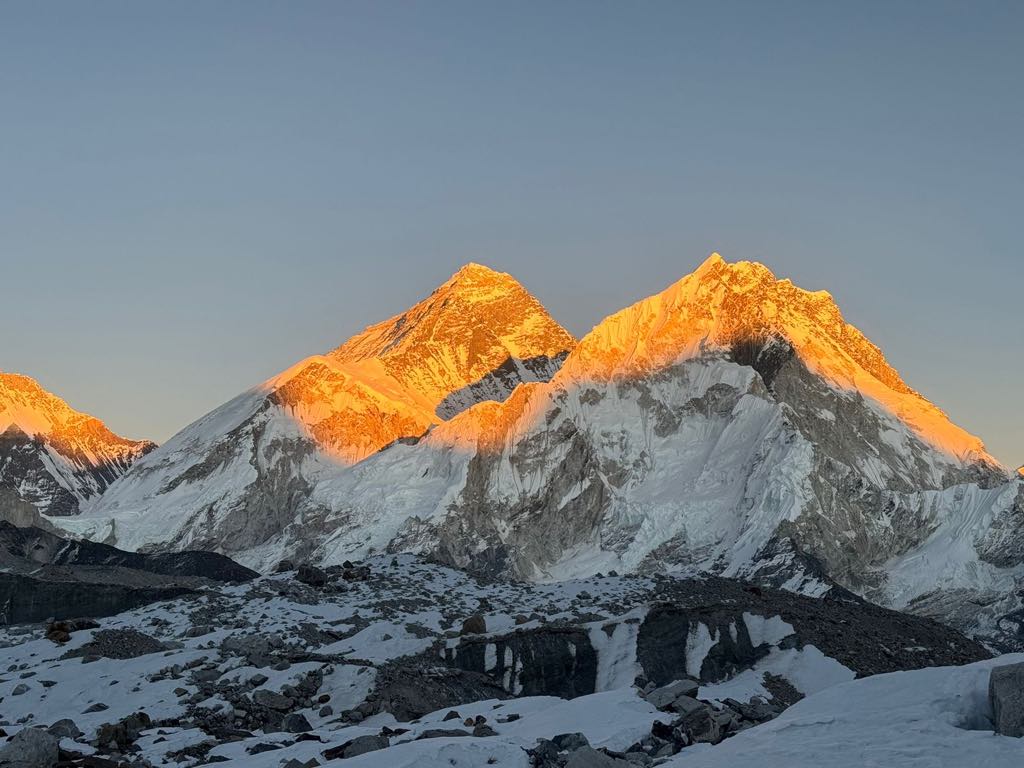
Another major highlight is the hike to Kala Patthar. This viewpoint is famous for sunrise and close-up views of Mount Everest, Nuptse, Pumori, and other peaks. While Everest Base Camp itself does not always provide the best full view of Everest, Kala Patthar offers one of the finest Everest panoramas in Nepal. For many trekkers, this is the visual climax of the journey.
After completing Everest Base Camp and Kala Patthar, the route continues toward Chhukung and crosses Kongma La, the final and often most demanding pass of the trek. Kongma La is high, remote, and physically challenging, but the reward is a powerful sense of achievement and incredible views across the Khumbu region. After crossing this pass, the trail descends toward Dingboche, Tengboche, Namche Bazaar, and finally back to Lukla.
The Clockwise Everest Three Pass Trek is not usually listed among easy short treks in Nepal, because it requires good fitness, acclimatization, and several weeks of walking. However, for trekkers who have limited time but want a complete Everest region experience, a well-planned itinerary can make the journey efficient and rewarding. It is ideal for experienced hikers, adventure lovers, and travelers who want to explore beyond the standard trail.
For travelers interested in luxury trekking Nepal, this route can also be arranged with upgraded services where available. In the lower sections of the Everest region, especially around Lukla, Phakding, Namche, and some nearby villages, better lodges and comfort options may be available. However, the higher and more remote areas of the Three Pass route are more basic, so luxury on this trek means strong support, professional guides, safe pacing, quality meals, clean accommodation where possible, and reliable logistics.
Compared with the Annapurna Base Camp trek, the Everest Three Pass Trek is longer, higher, colder, and more physically demanding. The Annapurna Base Camp trek is famous for its beautiful forests, Gurung villages, terraced hillsides, and close mountain amphitheater views. The Clockwise Everest Three Pass Trek, on the other hand, offers high passes, glaciers, Sherpa culture, and direct access to Everest Base Camp. Both routes are excellent choices for trekking in Nepal, but they provide very different Himalayan experiences.
The best seasons for this trek are spring and autumn. Spring, from March to May, brings stable weather, longer daylight, and blooming rhododendrons in lower areas. Autumn, from September to November, is popular for clear skies, fresh mountain views, and excellent walking conditions. Winter is possible for highly experienced trekkers, but snow and extreme cold can make the high passes difficult. Monsoon season is less recommended due to rain, clouds, flight delays, and slippery trails.
Safety is one of the most important parts of this trek. Since the route crosses three high passes above 5,000 meters, proper acclimatization is essential. Trekkers should not rush the itinerary. Rest days in Namche and other strategic locations help the body adjust to altitude. A professional trekking guide can monitor symptoms, manage route conditions, arrange accommodation, and make safe decisions if weather or health issues appear.
The Clockwise Everest Three Pass Trek is also culturally rich. The route passes through Sherpa villages, Buddhist monasteries, prayer wheels, mani walls, and traditional mountain settlements. Tengboche Monastery is one of the spiritual highlights of the journey. The warm hospitality of the Sherpa people adds depth to the trek, making it not only a mountain adventure but also a cultural experience.
Food and accommodation are generally available in teahouses throughout the route, though facilities become simpler at higher altitudes. Trekkers can expect meals such as dal bhat, noodles, soup, rice, potatoes, eggs, pancakes, tea, and coffee. Dal bhat is especially popular because it provides strong energy for long walking days. Drinking enough water, eating properly, and walking slowly are very important for maintaining strength during the trek.
This trek is best suited for people who are physically prepared and mentally ready for long days in the mountains. Some days involve steep ascents, glacier crossings, rocky trails, cold mornings, and high-altitude walking. However, the rewards are exceptional. Few routes in Nepal combine Gokyo Lakes, Everest Base Camp, Kala Patthar, and three major passes in one complete journey.
For SEO and travel planning, the Clockwise Everest Three Pass Trek can be described as a premium adventure route for travelers searching for short treks in Nepal, luxury trekking Nepal, trekking in Nepal, Everest Base Camp trek, and Annapurna Base Camp trek alternatives. It is not the easiest trek, but it is one of the most complete and dramatic trekking routes in the Everest region.
In conclusion, the Clockwise Everest Three Pass Trek is a powerful Himalayan journey that blends adventure, culture, scenery, and personal achievement. Starting from Lukla and moving through Renjo La, Cho La, and Kongma La, the trek connects Gokyo, Everest Base Camp, Kala Patthar, and the classic Khumbu trail into one unforgettable route. For serious trekkers looking for a challenging and beautiful experience in Nepal, this trek stands among the finest adventures in the Himalayas.
Related Nepal Trekking Packages
- short treks in Nepal - Thorong la pass
- luxury trekking Nepal - Annapurna Sanctuary Trek vie Ghorepani
- trekking in Nepal - Annapurna Base Camp